Here you can find the latest news and surgical articles.
23 November 2026
Ankle Liposuction Overview: Procedure, Candidates, Recovery, and Risks
Key Takeaways
The best candidates are otherwise healthy, have realistic expectations, possess good skin elasticity and minimal subcutaneous fat around the ankles, and can commit to postoperative care to achieve optimal results.
Anatomical consideration should include evaluation of fat distribution, bony and muscle structure, surrounding nerves and vessels, and skin quality to identify realistic and safe contouring results.
Circulatory screening is necessary to detect risks of previous swelling, varicose veins, lymphedema, smoking, or immobility which might complicate healing and increase clotting or edema concerns.
The surgery involves accurate preoperative drawing of resection zones, prudent anesthesia choice, atraumatic fat aspiration with a small two to three millimeter cannula, and scrupulous blending of the supraliposuction scars to prevent deformities and maintain symmetry.
Recovery is divided into an acute phase characterized by swelling, bruising, the use of compression garments and activity restrictions. This phase gives way to gradual improvement over weeks to months and full contour refinement up to six months.
Risks are infection, bleeding, nerve injury, irregular contours, prolonged swelling, DVT, and potential for revision. Comprehensive candidate screening and careful technique minimize these risks.
Ankle liposuction overview describes the surgery which extracts small fat pockets around the ankle for a more slender silhouette. It discusses who is a good candidate, popular methods such as tumescent liposuction, potential outcomes, and recovery times. Risks, average costs in metric terms and realistic outcome measures help you compare options. The section provides specific advice on preparation, procedure steps, and post-op care in the main body.
Candidate Evaluation
Think candidate evaluation before ankle liposuction. Candidate evaluation describes the clinical factors that define candidacy, the tests performed in clinic, and how expectations and circulatory status influence safety and outcomes.
Key traits of ideal candidates: * Stable weight for at least a few months.
Localized subcutaneous fat around the ankle (fat pinch greater than or equal to 1–1.5 cm).
Calf pinch greater than or equal to 1.5–2.0 cm where applicable.
Fair to good skin elasticity.
No active edema, lipedema, or untreated venous disease.
Non-smoker or willing to quit pre and post surgery.
Compliance with compression and mobility protocols post-op.
Anatomical Factors
Examine the thickness and distribution of subcutaneous fat in the ankle region using palpation and the ankle fat pinch test. Recommended thresholds help guide decisions: an ankle pinch of about 1 to 1.5 centimeters and a calf pinch of 1.5 to 2 centimeters suggest sufficient removable fat. Consider bone structure and muscle definition. A slender bone shape or prominent tendons limit how much contour change is realistic. Note the proximity of nerves and blood vessels. Small surgical fields near the malleoli require precise technique to avoid sensory changes or hematoma. Evaluate skin quality for retraction. Good to moderate elasticity predicts smoother results, while poor elasticity or pre-existing cellulite raises the risk of contour irregularities and uneven skin surfaces.
Circulatory Health
Evaluate embolic risk and history preoperatively. A targeted vascular review looks for previous episodes of edema, varicose veins, venous ulcers, or lymphedema. Check factors that increase clot risk such as smoking, recent travel with prolonged immobility, hormonal therapy, or inherited clotting disorders. Provide adequate arterial and venous outflow to support healing.
Risk Factor
Potential Impact
History of DVT or PE
High perioperative clot risk; may contraindicate elective liposuction
Chronic venous insufficiency
Increased post-op swelling and delayed healing
Lymphedema
High risk for prolonged swelling and infection
Smoking
Poor tissue perfusion, delayed wound healing
Immobility
Raises risk of postoperative thromboembolism
FURTHER evaluate ankles swell throughout the day. Snug mornings and puffy evenings indicate edema instead of adipose, and liposuction is not suitable until fluid causes are treated.
Realistic Expectations
Explain that ankle liposuction enhances curves. It doesn’t reveal dramatic leg-size reduction. Healing is typically progressive with the swelling subsiding over weeks to months. Mention the possibility of slight irregularities or asymmetry. Even with expert technique, small differences can emerge. Highlight that permanent results are contingent on a steady weight and compliance to post-op care like compression, low impact activity early on, and follow-ups. A prudent consultation must exclude edema and lipedema beforehand.
Surgical Process
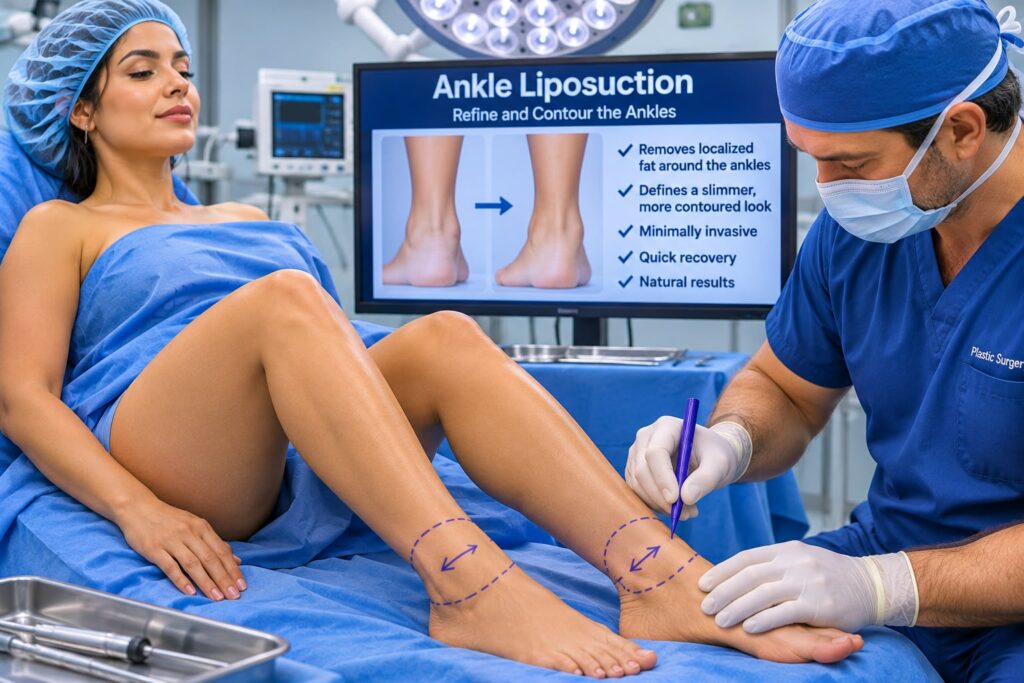
Surgical process of ankle liposuction involves a stepwise approach within a very small, anatomically complex area. The summary below sets the stage for the subsequent detailed process. Precision is important because the ankle is a tight zone with minimal soft tissue and even small mistakes can manifest as contour deformities. Safety and technique selection minimize risk and preserve natural ankle contour while meeting patients’ goals.
1. Preoperative Mapping
Preoperative marking of target fat pockets and planned incision sites on the ankle. Medial malleolus, lateral malleolus, and the Achilles tendon insertion guide placement. We planned to do symmetrical contouring on both ankles, so we drew mirror-image maps to compare. Document mapping with clinical photos and notes as a guide during surgery. This documentation aids if intraoperative modification is necessary and facilitates postoperative review.
2. Anesthesia Selection
We use local anesthesia with sedation or general anesthesia depending on patients' needs. Local with sedation typically minimizes systemic risks and can accelerate recovery, although general might be used for nervous patients or if bulkier or longer work is anticipated. Consider allergies, cardiopulmonary status, and other medical contraindications before choosing the plan. Talk them through their comfort and anxiety. Titrate medications and monitor intensity appropriately. Sedation on the day of the procedure and continuous monitoring back up safety.
3. Fat Extraction
Stick a skinny cannula through mini-incisions and vacuum out the fatty excess. Incisions are usually smaller than 12 mm (half an inch) and strategically located to conceal scars close to natural creases. Work surgically, with soft, deliberate movements, so as not to harm adjacent tissue, nerves, and blood vessels. Track fat volume removed to preserve a natural ankle contour and avoid over-resection that creates hollowed indentations. Minimize trauma to reduce postoperative bruising and swelling with ankle swelling that may last for a few months. Keep in mind that in some practices, extracted fat can be purified and injected into another area of the body by grafting in the case of combined procedures.
4. Contour Blending
Feather the edges of the area to blend with the calf and foot. Keep checking symmetry and proportion while removing fat, using both the recorded mapping and your tactile feedback during surgery. Don’t overcorrect. Sculpt final contours carefully in small passes. Once removed, close small incisions and cover with dressings. The patient might be asked to wear a compression garment during the first week to reduce swelling. Day-case discharge is common. Patients often go home the same day and are encouraged to walk the next day. Be aware of possible complications: bruising, numbness, infection, fluid collection, irregular contours, deep vein thrombosis, or thermal injury. Intraoperative technique and postoperative care aim to reduce these risks.
Procedure Benefits
Ankle liposuction eliminates stubborn fat deposits in the lower leg to achieve a sculpted and balanced contour. Here is a quick list of main benefits followed by a detailed description of each.
Improved leg shape
Enhanced self-confidence
Minimal downtime
Long-lasting results
Improved leg shape: Ankle liposuction helps create a more aesthetically pleasing leg shape by removing excess fat, leading to a more defined appearance.
Enhanced self-confidence: By achieving the desired leg contour, individuals often experience a boost in self-esteem and confidence in their appearance.
Minimal downtime: The procedure typically involves a quick recovery period, allowing individuals to return to their daily activities sooner than with more invasive surgeries.
Long-lasting results: The results of ankle liposuction can be long-lasting, provided that a healthy lifestyle is maintained after the procedure.
Improved leg contour and lower-leg proportion
Elimination of diet and exercise resistant body fat
Enhanced fit and appearance in footwear and clothing
Boosted self-confidence and body image
Potential improvement in skin tightness and cellulite appearance
Long-lasting aesthetic results when combined with healthy habits
Option to combine with other procedures for fuller contouring
It improves lower-leg shape. Eliminating small, localized fat pockets around the ankle and calf allows surgeons to establish more defined demarcations between ankle, calf, and foot. This can make legs appear longer, more balanced, and visually more proportional to the rest of the body. A sculpted ankle can transform the way your entire leg looks in profile and in boots or sandals.
Ankle and calf liposuction targets fat that is notoriously diet and exercise resistant. There are certain patients who have genetic or age-related fat deposits that do not contract with weight loss. With targeted liposuction, these deposits can be selectively removed, enabling you to achieve defined contours that other methods simply cannot. This is particularly beneficial for individuals who have tried targeted resistance and nutrition modifications without seeing the shape shifts they desire.
Handy closet perks abound. They say shoes feel better in narrow or stiff-width shoes, socks and boots are easier to get on, and clothes drape more predictably. A little tweak at the ankle can impact how your jeans, leggings, and boots sit, offering practical comfort and style simplicity.
Psychological benefits are quantifiable and significant. Confidence-boosting silhouette transformations. As reported in a 2024 clinical study, patients experienced low pain scores during recovery following calf and ankle contouring, which can alleviate decision-making for those worried about post-op discomfort. Another study discovered pleasing aesthetic outcomes at a 2-year follow-up, suggesting long-lasting results for some patients.
Skin quality can get better post procedure. Several patients notice an improvement in skin tightness and a minimized appearance of cellulite as any extra volume is eliminated and tissues settle. The final appearance is not immediate. Swelling can take up to six months to resolve, and true contour often emerges over several months.
Can be combined with other procedures for more extensive reshaping. Surgeons frequently combine ankle liposuction with calf liposuction, thigh sculpting, or lower body remodeling to create balance throughout the leg. A thoughtful plan and practical expectations contribute to healthy long-term results.
Critical Nuances
Ankle liposuction requires particular nuance as the region is tiny, exposed, and influenced by a variety of forces. About Critical Nuances Understanding local anatomy, skin quality, and patient expectations lays the groundwork for technique decisions and postoperative care prior to addressing technical challenges.
Gravity Complications
Gravity draws fluid and swells the ankles more than much of anything else. Swelling around the ankles and calves can continue for as long as 6 months after surgery, and the final results may not be visible until this swelling has subsided, which could be 6 months or more. Elevation of the legs early on is necessary, and patients should be instructed to rest with their legs elevated above the heart several times a day, especially during the first two weeks. This practice minimizes dependent edema and accelerates capillary reabsorption.
Compression garments are generally worn for a few weeks to months to control swelling and support the skin in adapting to its new contour. Compression reduces daily inflammation from walking, heat, standing, and flying. Implement staged compression: firmer compression in the first two to four weeks, then lighter garments for up to three months based on residual swelling and skin tone.
Watch for delayed healing as dependent positioning of the ankles can delay epidermal recovery. Routine follow-up should monitor for persistent drainage, skin breakdown, or venous insufficiency. For stubborn localized accumulations, gentle massage and lymphatic drainage can be beneficial. More aggressive measures such as aspiration are infrequently necessary but should still be an option.
Asymmetry Challenges
These are natural asymmetries, which are common between the right and left ankles. Your detailed preoperative evaluation should capture these asymmetries with standardized preoperative photographs — front view, side view, three quarter angle — because patients see changes differently from each perspective. Strive for balanced fat removal: remove tissue conservatively on the fuller side while preserving contour on the opposite side to avoid overcorrection.
Reassess intraoperatively with palpation and visual exam with patient semi-erect to account for gravity. If fat thickness is very thin, under 1.5 cm on the calf or under 1 cm on the ankle, liposuction cannot be safely or effectively done, and other options or managing expectations are necessary.
Be sure to set your patients’ expectations for potential touch-up procedures should stubborn asymmetry remain once all the swelling has subsided. Slight swelling and numbness can remain for months after ankle liposuction, which can hide mild asymmetry in the beginning. A thorough consultation should eliminate edema and lipedema prior to ankle liposuction so the appropriate candidates move forward.
Challenge
Surgical or Care Consideration
Gravity-related edema
Elevation, staged compression, lymphatic massage, close follow-up
Skin retraction risk
Conservative aspiration, subcutaneous preservation, possible energy-assisted devices
Thin fat layer
Avoid lipo if <1.5 cm calf or <1 cm ankle; consider alternatives
On asymmetry pre-op photos, intraop reassessment, and plan for touch-ups.
Recovery Timeline
Ankle liposuction recovery occurs in stages. The acute phase encompasses those first days to weeks when symptoms are at their worst. The extended recovery period lasts for months as swelling decreases and your final shape appears. Here’s a pragmatic checklist of milestones and a deep dive into what to expect and best support healing.
Acute Phase
Checklist: Expect initial swelling and bruising. Plan for compression garment use. Arrange limited activity and leg elevation. Schedule an early follow-up within 48 to 72 hours.
In the first 72 hours, anticipate moderate pain, bruising, and inflammation, with moderate to severe pain subsiding by day five. Most people feel capable of performing light work at home. Rest is key. Take prescribed pain medication and avoid aspirin-like medications unless otherwise cleared by your surgeon.
Compression garments assist tissue adherence and minimize swelling. Wear as directed, usually around the clock for the initial one to two weeks, then just during the day for a few more. Tightness must be snug, but not restrict blood flow.
Keep activity to short walks around the house to minimize clot risk. Prop legs up when sitting to assist fluid drain and reduce puffiness. Avoid long flights or lots of standing during the first week if at all possible.
Follow-up visits in the first week allow the surgeon to confirm incision and drainage. Sutures can be evaluated and early complications managed. Bring a list of questions regarding pain control, infection, and garment fit.
Long Recovery
Checklist: Expect gradual reduction of swelling and bruising over weeks. Plan a return to desk work around two weeks. Avoid strenuous exercise until six weeks. Anticipate contour refinement up to six months and possible minor changes up to one year.
Swelling is most apparent in week one and subsides in subsequent weeks. Moderate bruising and soreness last around 3 weeks, with mild soreness extending for 3 to 6 weeks. The majority of patients resume nonstrenuous work at two weeks, but they save a minimum of 6 weeks prior to heavy lifting or high-impact training.
Contour improvement becomes more apparent over months. Striking transformations happen in the initial weeks, and patients tend to experience the majority of their result between three and six months. Recovery timeline — Final stabilization can take up to 12 months, as lingering lower-leg edema can last for months.
Keep up those healthy habits, including salt control, hydration, and leg massage as advised. Maintain a consistent exercise regimen when approved. These steps maintain results and prevent regaining fat.
Following your aftercare instructions is key to success. Respecting garment protocols, attending follow-ups, and pacing activity significantly enhance results and reduce complication risk.
Clinical Risks
Ankle liposuction is very low-risk, yet knowing the possible complications educates realistic expectations and steers safer care. Contour deformity is the most common complication, in which uneven fat extraction produces lumps, bumps, or asymmetry around the ankle. Contour problems occur from under- or over-resection, irregular cannula tracking, or patient factors like thin skin and minimal subcutaneous tissue. These irregularities can be subtle or obvious and often become more apparent as swelling dissipates, with some patients needing revision for persistent deformity.
Infection, bleeding, and nerve injury are the main clinical risks. Early-stage wound infections such as cellulitis can become severe sepsis if not treated quickly or, in rare cases, necrotizing fasciitis, a surgical emergency. Excessive bleeding may manifest as extended drainage, hematoma, or a requirement for exploration. Sensory disturbances are frequent and typically transient. However, direct nerve injury or stretch can cause persistent numbness, tingling, or painful neuropathic symptoms. Standard perioperative precautions, including antibiotic prophylaxis when appropriate, meticulous hemostasis, and gentle technique, reduce these risks.
Watch for systemic inflammatory response and embolism. Liposuction leads to a temporary increase in inflammatory markers including interleukin-6 and C reactive protein. This is not associated with chronic inflammation or increased risk of renal disease in the majority of patients. Fat embolism is uncommon but critical. Fat embolism mortality is reported at 10 to 15 percent, so clinicians should watch for respiratory distress, neurological symptoms, and hemodynamic instability postoperatively. There have been at least 17 cases of clinically significant fat embolization observed after liposuction plus fat grafting.
Deep vein thrombosis (DVT) and pulmonary embolism (PE) are rare after liposuction, with venous thromboembolic event incidence approximately 0.03% and total liposuction mortality around 0.01%. PE is the number one cause of mortality post-liposuction. Risk reduction encompasses evaluating patient risks, early ambulation, and employing suitable mechanical or pharmacologic prophylaxis when warranted.
Swelling and edema of the treated ankle persist and can be prolonged for up to 6 months. This can obscure ultimate contour results and influence patient contentment. When outcomes are less than ideal, revision surgery may be required. Surgeons should advise patients regarding timing, possible approaches, and realistic gains. Preoperative planning, conservative removal in areas with thin soft tissue, and clear postoperative instructions minimize many of these risks.
Conclusion
Ankle liposuction sculpts fat and defines contour. It is appropriate for adults with fixed weight and tight skin. Surgeons use tiny incisions, local fluid, and cannulas to extract fat. The majority experience minimal pain and resume light labor at one week. Swelling subsides over weeks and the final contour emerges by three months. Complications include bruising, numb spots, uneven contour, and rare infection. Select a board-certified surgeon with transparent before-and-after pictures and a consistent history. Request a written schedule, expense outline, and rehabilitation stages. For a genuine taste of outcomes, examine scenarios with close body structures and lifestyle. Want to find out a little more or schedule a consult? Contact a reputable clinic for personalized guidance.
Frequently Asked Questions
What makes someone a good candidate for ankle liposuction?
Ideal candidates are adults in good health with excess fat around their ankles that does not respond to diet or exercise. Good candidates have realistic expectations and no significant skin laxity or circulation issues.
How is ankle liposuction performed?
They make tiny incisions and use slender cannulas to suction out fat using tumescent or ultrasound-assisted methods. It is typically an outpatient procedure performed under local anesthesia with sedation or general anesthesia based on the case.
What are the main benefits of ankle liposuction?
Rewards – ankle contour, shoe fit and confidence. This procedure targets stubborn fat pockets quickly and can sculpt a more balanced lower-leg appearance when performed by a skilled surgeon.
What critical nuances should patients know before surgery?
Expect realistic goals: significant fat removal may be limited by skin elasticity. Surgeons test circulation and nerve function. A masterful touch is imperative to prevent contour irregularities and asymmetry.
What is the typical recovery timeline?
The majority of individuals resume light activity in three to seven days. Swelling and bruising reach their maximum intensity at one week and then slowly resolve over four to twelve weeks. It can take up to six months for the tissues to settle and final results to become apparent.
What are the common clinical risks and complications?
Risks comprise swelling, bruising, infection, numbness, contour irregularities, and blood clots. Severe complications are rare but may occur. A board-certified surgeon reduces risks.
How long do results last, and can fat return?
These are long-lasting results if you remain a stable weight. If fat cells remain, they will become enlarged if you gain weight. Healthy living and exercise maintain results.