Here you can find the latest news and surgical articles.
24 November 2026
BBL Results by Body Type: Buttock Profiles, Anatomy & Options
Key Takeaways
Anatomy dictates what a BBL can accomplish. Evaluate donor fat, skin laxity, pelvic width, and muscular anatomy pre-surgery and communicate realistic expectations to your surgeon.
Different butt shapes and body types respond differently. Tailor techniques and placement to flatter your frame, hip dips, and desired profile to enhance shape retention.
Petite and athletic patients require conservative, strategic fat grafting to keep proportion and definition intact. Curvy patients can make use of the available fat to optimize shape and waist-to-hip ratio.
For inverted or asymmetric bases, target upper and lateral fat placement. Use staged or combined liposuction to fix contour issues and avoid overfilling.
Think of complementary procedures or alternatives when donor fat is in short supply or you have lax skin, such as implants, dermal fillers or non-surgical options like Sculptra.
To be safe and recover well, know the risks, follow post-op instructions, and anticipate that some transferred fat will reabsorb and swelling will last for months, so you will have final results gradually.
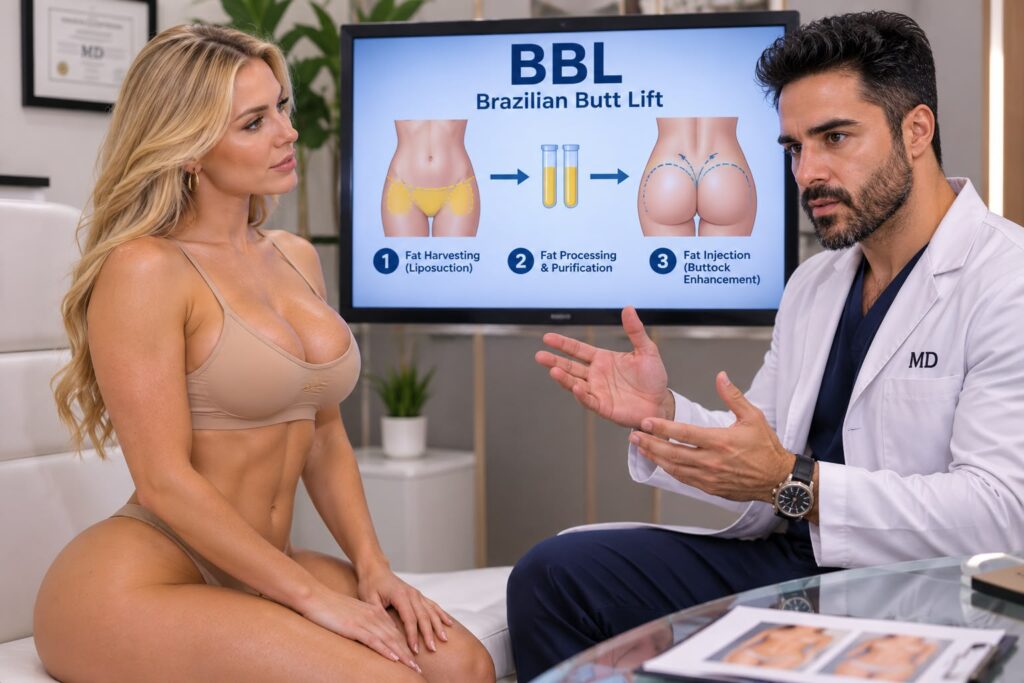
What to know about BBL results for different body types explains how shape, fat distribution, and skin quality influence results. Expectations should differ based on your starting hips, waist, and donor fat available. Recovery time, scar placement, and realistic volume goals are different by body type and by age. Surgeons evaluate proportions, health, and lifestyle to map out grafting and contouring. The body goes through steps, timelines, and choices for lean, average, and curvy frames.
Anatomy Influences
Your anatomy significantly influences what a Brazilian butt lift (BBL) can achieve. Research highlights how specific physical traits affect anticipated results, guiding plastic surgeons in planning the procedure. Patients can establish realistic expectations for their desired shape based on their unique body contouring characteristics.
Recognize that the amount and distribution of available donor fat directly impact BBL results and the achievable butt shape.
Donor fat is essential for constructing the desired shape and fullness of the buttocks, so more donor fat means more possibilities for a successful Brazilian butt lift procedure. Individuals with ample fat reserves in areas like the abdomen, flanks, or inner thighs can typically anticipate higher volume transfers, allowing for greater flexibility in shaping curves during a BBL surgery. When fat is sparse, the plastic surgeon may have to opt for smaller transfers or draw from multiple donor areas, which can increase operative time and the recovery process. For instance, someone with 8 to 12 kilograms of subcutaneous fat may allow for higher-volume grafting compared to someone with only 2 to 4 kilograms.
Understand that skin elasticity and tissue quality determine how well transferred fat survives and shapes the buttocks after surgery.
Expendable skin that stretches and rebounds plays a crucial role in the Brazilian butt lift procedure, as it keeps grafted fat where it’s implanted and allows for more gradual contours. Poor elasticity, often seen after massive weight loss or aging, may lead to sagging or unevenness, impacting the final result despite sufficient fat transfer. Factors such as genetics, smoking history, and sun exposure can also affect elasticity. To enhance the outcome of the butt enhancement procedure, surgeons may supplement modest liposuction with external skin tightening or recommend staged procedures when elasticity is poor, ensuring patients achieve their desired shape.
Factor in pelvic width, waist size, and muscle structure, as these anatomical traits affect the final contour and projection of the butt lift.
Pelvic shape establishes a foundation for projection that is essential during a Brazilian butt lift procedure, as it reads from the profile and back views. If you have a narrow pelvis and a wide waist, this can restrict your perceived hip-to-waist contrast despite generous fat transfer. Strong gluteal muscles can impart a natural lift and complement grafted fat nicely, while weak or small muscles may need more fat for the same projection. Rib cage and hip bone landmarks direct where fat needs to be for balance, ensuring a proportionate result. For example, wide hips and a narrow waist can give you a more pronounced hourglass with less transferred volume than a straight rectangular torso.
Note that body type, including BMI and fat stores in specific areas like the abdomen, flanks, and thighs, dictates the extent of enhancement possible with a Brazilian butt lift procedure.
BMI provides a general estimate of fat availability but not location. Even two individuals with the same BMI can have very different donor areas for the Brazilian butt lift procedure. A targeted examination of these areas shows where fat can be taken without contour deformity. High-BMI patients can sometimes provide more volume for butt enhancement procedures but pose greater surgical risk. Low-BMI patients might require fat grafting in conjunction with implants or staged sessions to achieve their desired outcome.
Shape Variations
Body shape determines how a Brazilian butt lift (BBL) alters your silhouette, influencing where fat likes to linger and what methods most artfully sculpt a natural outcome. Here are typical profiles and what you need to know about the butt enhancement procedure, fat grafting, contouring, and surgical planning that varies by frame.
1. Petite Frames
With little donor fat in lean patients, there is a ceiling on how much can be safely transplanted during a Brazilian butt lift procedure. Surgeons usually advise subtle augmentations versus plunge fills to prevent a synthetic appearance. Proportion matters: adding small, well-placed fat deposits at the upper buttock gives lift without overwhelming a narrow pelvis. The method needs to be meticulous to optimize fat viability. Employ light aspiration, tiny aliquot grafts, and layering to enhance graft survival. Low-BMI patients have greater visibility of irregularities, so accurate smoothing and cautious overfilling are key to avoid lumps or asymmetry in the final result.
2. Athletic Builds
A muscular gluteal base varies where injected fat will settle and how it zips in during a Brazilian butt lift procedure. Fat injected more superficially can soften bony edges, while deeper injections along muscle borders can provide additional projection and enhance the desired shape. The goal is balance: maintain athletic definition yet add roundedness where desired. Softer contours may require a detailed blending of fat, and occasionally combination techniques like liposuction around the hips to create a more appealing curve. For various shapes, custom plans tweak volumes per quadrant to prevent covering natural muscle striations.
3. Curvy Figures
Curvy patients generally have generous amounts of donor fat from the stomach, love handles, and inner thighs, which means they can tolerate higher-volume grafting during a Brazilian butt lift for enhanced projection and roundness. About shape variations — waist-to-hip ratio — involves liposuction to take fat from the waist and relocate it to the buttocks, intensifying contrast and sculpting a timeless hourglass figure. Liposuction can provide smooth transitions before grafting, helping to correct asymmetry. With more fat available, plastic surgeons can create subtle shape changes across multiple planes while keeping graft survival in mind through careful spacing of injections.
4. Inverted Profiles
Shape variations like the inverted V or sloped profiles necessitate volume addition to the upper buttock during a Brazilian butt lift to achieve a rounded silhouette. By filling hip dips and outer hips, one can create a smoother lateral curve while addressing a slim pelvis through enhanced hip projection. Precise contouring of fat location is crucial, as improper layering can emphasize the slope or worsen asymmetry, making the BBL procedure's staged grafting vital for predictable results.
5. Asymmetric Bases
Document asymmetry pre-op and plan targeted grafting during a Brazilian butt lift procedure to balance size, projection, and shape differences. Combine selective liposuction on the larger side with added grafts to the smaller side for a proportionate result. Small, repeated injections can refine balance while avoiding overfilling one side, which raises the risk of complications.
Complementary Procedures
Complementary Procedures Let’s face it, combining your BBL with other procedures can enhance your overall shape and skin tone and provide excellent long-term results. It depends on body type, skin quality, fat availability, and goals. Below are common combos, what they bring to the table, and pragmatic examples to guide you.
Lipo 360, Tummy Tuck, and J Plasma for Skin Tightening
Lipo 360 extracts fat around your torso, including the abs, flanks, and back, creating a sleeker frame for the transplanted fat to rest on. For a cut athlete, lipo 360 sculpts a more visible waist, enhancing the buttock projection for a more powerful appearance. If you have higher body fat, this procedure contours the midsection while providing additional graft material for the Brazilian butt lift (BBL) procedure.
A tummy tuck, or abdominoplasty, effectively removes excess skin and tightens the abdominal muscles. This procedure is particularly ideal for patients dealing with post-weight loss or post-pregnancy loose skin. Pairing a tummy tuck with a BBL can yield a firm front profile while preventing sagging that detracts from your new buttock silhouette. However, expect a longer recovery process and more scarring on your tummy.
Incorporating J Plasma or other energy-based skin-tightening techniques concurrently can contract lax skin following high-volume liposuction. For more mature patients or those with striae, using J Plasma aids the skin in smoothing out textural abnormalities. This method is less invasive than a full excision and can significantly accelerate the recovery process, allowing for a quicker return to normal activity.
Butt Implants and Dermal Fillers for Low-Fat Patients
Other patients may lack sufficient donor fat for a full fat-transfer Brazilian butt lift procedure. Butt implants can provide a predictable volume and projection, making them suitable for slim frames, especially when paired with minimal liposuction for body contouring. However, these implants carry risks such as infection and capsular complications. Therefore, a thorough consultation about the anticipated feel and location is essential for achieving the desired outcome.
For those with very minor volume requirements, hyaluronic acid or other dermal fillers can be considered as a temporary butt enhancement procedure. While fillers offer incremental results with minimal downtime, they often require repeated applications, which can become costly over time.
Addressing Skin Laxity, Stretch Marks, and Stubborn Fat
Skin laxity requires either removal through a tummy tuck or lower body lift, or tightening through radiofrequency or laser. Stretch marks respond variably to microneedling, fractional lasers, or PRP, with modest results and can improve texture. Lipo-resistant fat pockets can be addressed with targeted lipo, cryolipo, or ultrasound-assisted procedures in the same operative schedule.
Benefits and limitations vary by combination: some pairings increase aesthetic harmony but add recovery. Others provide subtle benefits with lower hazard. When choosing, consider fat availability, skin quality, degree of permanence, downtime, and price. Consider staged approaches when risks are additive or medical history cautions.
Realistic Outcomes
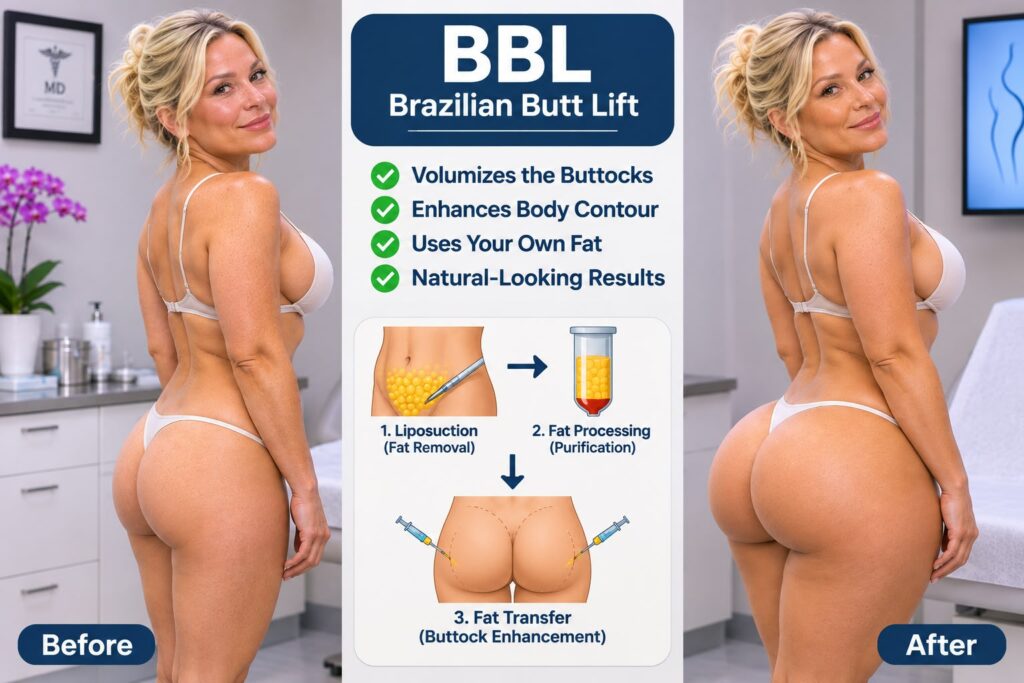
Each body reacts to BBL with varying levels of fat survival and shape transformation. Assume that not all of the transferred fat cells will thrive. Generally, around 50 to 70 percent of the grafted volume persists long-term, although reported figures vary by technique, surgeon expertise, and patient biology. Fat reabsorption occurs in the initial weeks to months as some cells do not re-form blood supply. For instance, a patient with 27 oz transferred per side might experience a long-term increase nearer to 14 to 19 oz per side once healing and resorption conclude. Surgeons usually overfill a bit at surgery to compensate for this anticipated loss.
Swelling, bruising, and early shape changes are normal in recovery after a butt lift surgery and do not represent the final appearance. Swelling can be painful in the first two weeks, then subsides over a few months. Deep-seated swelling can persist and obscure definition. Bruises will fade within one to three weeks. Shape shifts happen as fluid clears and fat settles, with the buttocks potentially appearing rounder or flatter at each stage. The final contour can take three to six months to emerge, with subtle refinements taking up to a year, so it’s essential to schedule clothes, travel, and events accordingly.
A strict post-op regimen has a profound effect on results from the butt enhancement procedure. It’s crucial to think about realistic outcomes. Wearing a suggested compression garment manages swelling and supports grafted fat as it takes root. Patients should avoid sitting directly on their buttocks for 2 to 8 weeks, depending on the surgeon’s protocol. If sitting cannot be avoided, using cushions that offload pressure from the grafted area is advisable. Position while sleeping is also important, with many surgeons recommending sleeping on the stomach or side during the initial recovery phase. Quitting smoking and maintaining a stable weight pre and post-op significantly helps fat survive. Even small weight fluctuations can alter the appearance of the grafted fat, making it vital to stay at a consistent weight for the most predictability.
Not every patient will achieve a dramatic hourglass figure or extreme projection through the Brazilian butt lift surgery. Factors such as body frame, pelvic width, waist-to-hip ratio, and available donor fat limit what can be realistically achieved. Very thin patients with minimal abdominal or thigh fat may require staged procedures or fat supplementation options, like butt implants, to achieve more aggressive outcomes. A realistic consultation will juxtapose your current body proportions, demonstrate your probable post-op measurements, and offer options such as liposuction to the waist to increase your apparent projection.
Clinical Perspective
Wide angle clinical lens frames specific risks, technique, recovery process, and candidate variables that influence the final result of the Brazilian butt lift across various shapes and sizes.
Risks and complications: fat embolism, infection, asymmetry, scarring
Fat embolism is the most severe complication associated with the Brazilian butt lift procedure, where fat enters the bloodstream and becomes lodged in the lungs or brain. The risk is greater when fat is injected too deep or into muscle. Reported cases are uncommon but frequently serious. Infection can occur after any surgery, including butt lift surgery, presenting with redness, fever, or drainage. If not caught early enough, it can destroy fat grafts and necessitate additional surgery. Asymmetry is very common and can be due to uneven fat extraction or grafting, or simply one side healing differently than the other. Scarring is typically minimal at tiny liposuction and injection sites. However, patients with suboptimal scar healing may develop wider or raised scars. Those with a higher body mass index (BMI) who need large-volume grafting may face a greater chance of contour irregularity and wound healing problems.
Technique: cannula placement and layer selection to improve safety and fat survival
Good technique is essential for a successful brazilian butt lift procedure, as it eliminates many complications. The cannula location should maintain a subcutaneous plane over the muscle to prevent intramuscular injection, which escalates embolism risk. By injecting small amounts of fat using blunt cannulas and administering tiny aliquots while withdrawing the cannula, the procedure maximizes surface area contact and fat survival. Layer selection plays a significant role; grafts should be spread across superficial and deep subcutaneous layers while avoiding direct muscle placement. For patients with thin subcutaneous tissue, the plastic surgeon may place fat superficially in small volumes to ensure a natural bbl result.
Recovery influencers: anesthesia, incision sites, and activity levels
What about anesthesia? General anesthesia tends to cause more fluid shifts and nausea, while local with sedation limits the systemic effects. Incisions during a brazilian butt lift are tiny but must be strategically placed to permit both efficient liposuction and grafting access safety, with positioning in natural creases minimizing visible scarring. Postoperative activity level strongly affects the final result. Early walking is encouraged, but sitting directly on the grafted buttocks should be limited for at least two to six weeks, depending on surgeon protocol, to avoid pressure-related fat loss. Gradual return to exercise is usually around four to six weeks, and heavy lower-body resistance is delayed even longer. For example, a patient who sits for work may need cushions and modified postures to protect grafts.
Ideal candidates for a brazilian butt lift procedure have ample donor fat in areas such as the abdomen, flanks, or thighs. Very lean patients are poor candidates and may require staged procedures. Healthy skin elasticity enables the buttock envelope to reform around fresh volume, while poor elasticity can cause sagging regardless of how much fat is added. Being medically fit, at a steady weight, a non-smoker, and having realistic expectations about your desired shape and potential need for touch-ups are crucial.
Non-Surgical Alternatives
These non-surgical butt enhancement options, such as the Brazilian butt lift procedure, are available for people who want a shape change with less downtime and immediate less risk than surgery. These techniques have different mechanisms, results, and maintenance requirements, allowing you to establish reasonable expectations based on body composition, fat deposits, and habits.
Liquid BBL: Sculptra and Dermal Filler Injections
Liquid BBL, a popular butt enhancement procedure, employs injectables to increase the volume or trigger collagen underneath the buttock skin. Sculptra, a poly-L-lactic acid product, stimulates slow collagen growth over weeks to months, providing a more naturally feeling lift. When done in a series, this treatment can last between 18 to 36 months, making it an excellent option for those seeking a Brazilian butt lift without surgery. Hyaluronic acid or other volumizing dermal fillers can offer immediate shape change, typically lasting 6 to 18 months depending on the product and dose. A typical Sculptra plan may involve three sessions spaced six weeks apart, adding subtle roundness without a large, sudden size change.
Injection technique matters: filler placed too superficially can cause lumps. Filler placed too deep can risk nodules. Sculptra is ideal for patients requiring texture enhancement and subtle volume, whereas thick fillers are perfect for precise contouring locations. Non-surgical alternatives do not eliminate or relocate fat; they simply add or construct tissue. Therefore, results are dependent upon your baseline shape.
Longevity, Volume Increase, and Risks: Non-Surgical vs. Fat Transfer
The brazilian butt lift procedure (surgical BBL) typically achieves larger, more enduring volume enhancements because fat grafts integrate into the buttocks and can last for years if successful. This surgical BBL usually adds several hundred cc per side, creating the desired shape and fullness. In contrast, a liquid BBL often results in smaller volume gains per session, necessitating repeat treatments to maintain size. While surgical BBL carries higher immediate risks, including a rare but serious risk of fat embolism if fat is injected into muscle, non-surgical injections avoid that risk but may lead to issues like unevenness and infection. Overall, the recovery process varies, with surgical BBL requiring weeks of limited activity compared to the shorter downtime associated with injectables.
Who Should Consider Non-Surgical Options
Non-surgical options, such as injectables, fit individuals with limited donor fat or those seeking a subtle enhancement in their buttocks. These options offer a lower-risk, rapid-recovery path and serve as an excellent way to test-drive a new shape before undergoing a more invasive procedure like a Brazilian butt lift. For instance, a lean individual with minimal abdominal fat who seeks a subtle lift might achieve more favorable results with Sculptra than trying fat transfer, especially if they require minimal downtime.
Quick-Reference Pros and Cons
Pros:
Low downtime and quick return to routine
Lower immediate surgical risk
Good for small, targeted changes or texture improvement
Option for those without donor fat
Cons:
Smaller volume gains per session
Requires repeat treatments for maintenance
Risk of lumps, migration, and localized reactions
Not a substitute for large reshaping needs
Conclusion
A Brazilian butt lift provides distinct, body-specific transformations. Lean frames get soft curves with fat added to hips and butt. Medium builds receive fuller shape and smoother lines. There is more lift and contour to rounder bodies with careful fat sculpting. Surgeons select fat sites, graft volumes, and placement to complement each body type and objective. Recovery time and final shape differ by health, skin tone, and activity. Non-surgical options provide modest change and less risk but no long-term fat transfer. Use photos of similar bodies to set realistic goals. Consult with your board-certified surgeon regarding your measurements, graft plan, and exercise restrictions. Schedule a consult to receive personalized estimates and a clear plan for your physique.
Frequently Asked Questions
What factors determine BBL results for different body types?
Anatomy, fat distribution, skin elasticity, and bone structure all influence the results of a brazilian butt lift procedure. Surgeons evaluate these factors to strategize fat harvest and grafting, ensuring a safer outcome.
How does body fat percentage affect BBL outcomes?
More fat stores make harvesting easier for the Brazilian butt lift procedure, allowing for larger volume transfers while low body fat may necessitate butt implants for desired shape.
Will my natural body shape limit the final BBL shape?
Yes. Pelvic width, hip-to-waist ratio, and gluteal muscle tone all impact the attainable contour during a Brazilian butt lift procedure, as surgery amplifies shape and plays within your anatomy.
Can complementary procedures improve BBL results?
Yes. Liposuction of the waist, flanks, or back sculpts your shape and emphasizes buttock projection, enhancing the desired shape during a Brazilian butt lift procedure.
What realistic expectations should I have based on my body type?
Anticipate subtle to dramatic enhancement during a Brazilian butt lift procedure, depending on your available fat, skin quality, and anatomy. Surgeons show personalized before-and-afters to calibrate realistic expectations.
How do surgeons evaluate safety across different body types?
During a consultation, board-certified plastic surgeons evaluate medical history, body composition, and circulation to determine the best approach for the Brazilian butt lift procedure, ensuring a proportionate result.
Are non-surgical options effective for different body types?
Non-surgical lifts and fillers offer subtle contouring for buttocks but are constrained by fat deposits and skin elasticity. They are appropriate for patients desiring a subtle enhancement or those unable to undergo a brazilian butt lift.