Here you can find the latest news and surgical articles.
21 October 2026
Liposuction vs Ultrasound Therapy: Which Body Contouring Option Is Right for You?
Key Takeaways
Liposuction draws fat away more instantaneously via surgical incision and suction and produces more dramatic contouring in a single procedure. It demands anesthesia, surgeons, and extended healing.
Ultrasonic cavitation employs focused ultrasound to non-invasively rupture fat cells so the body naturally clears them over weeks, resulting in reduced downtime and less procedural risk.
Pick lipo for big-volume extraction and fast, reliable outcomes. Pick ultrasound therapy for smaller, sculpting-type reduction when safety and fast re-entry are important.
Anticipate greater immediate risks and downtime with lipo. Numerous ultrasound treatments lead to more gradual change when going acoustic cavitation.
Candidates matter: Healthy adults near stable weight with good skin tone suit liposuction, while people close to their ideal weight with small stubborn pockets are better candidates for ultrasound treatments.
So before you decide, compare clinical proof, costs, downtime, and practitioner credentials and talk through your personal risks and realistic results with a qualified provider.
Lipo versus ultrasound therapy are two of the non-surgical body-contouring options compared. Liposuction employs surgical fat removal under anesthesia and provides an immediate, quantifiable volume alteration. Ultrasound is a noninvasive therapy that utilizes focused sound waves to melt adipocytes over the course of weeks with less short-term risk and more gradual results. The choice depends on desired speed, cost, downtime, and medical suitability. Here’s what you need to know in terms of the procedure and recovery, typical results, and things to consider when deciding between them.
Core Mechanisms
Liposuction and ultrasound therapies deplete local fat through distinct physical and biological mechanisms. The below subsections describe how each works, how fat is eliminated or broken up and what occurs with surrounding tissue.
Surgical Removal
Tumescent infiltration involves long, thin needles that inject a saline solution with a local anesthetic and vasoconstrictor into the treatment area to reduce bleeding and ease fat removal.
Incision and cannula insertion: Small skin incisions allow passage of a metal cannula connected to suction. The surgeon moves the cannula back and forth to free fat.
Suction-assisted extraction: Negative pressure draws disrupted adipose tissue out through tubing into collection canisters. Volumes eliminated are quantified.
Hemostasis and closure: bleeding points are controlled, and small incisions are closed or left to heal. Compression garments are used to mold tissue.
Postoperative care includes monitoring for fluid shifts, infection, or seroma. Follow-up consists of drain removal if utilized and activity and compression instructions.
Liposuction instantly extracts fat and whole fat cells from the body while you’re under the knife. This immediate extraction can realize dramatic contour changes in one session, which is helpful when swift and reliable volume reduction is required. This method needs specialized suction devices and a skilled plastic surgeon to weigh cosmetic objectives against safety, since the procedure entails hazards concerning anesthesia, bleeding, and contour abnormalities.
Acoustic Cavitation
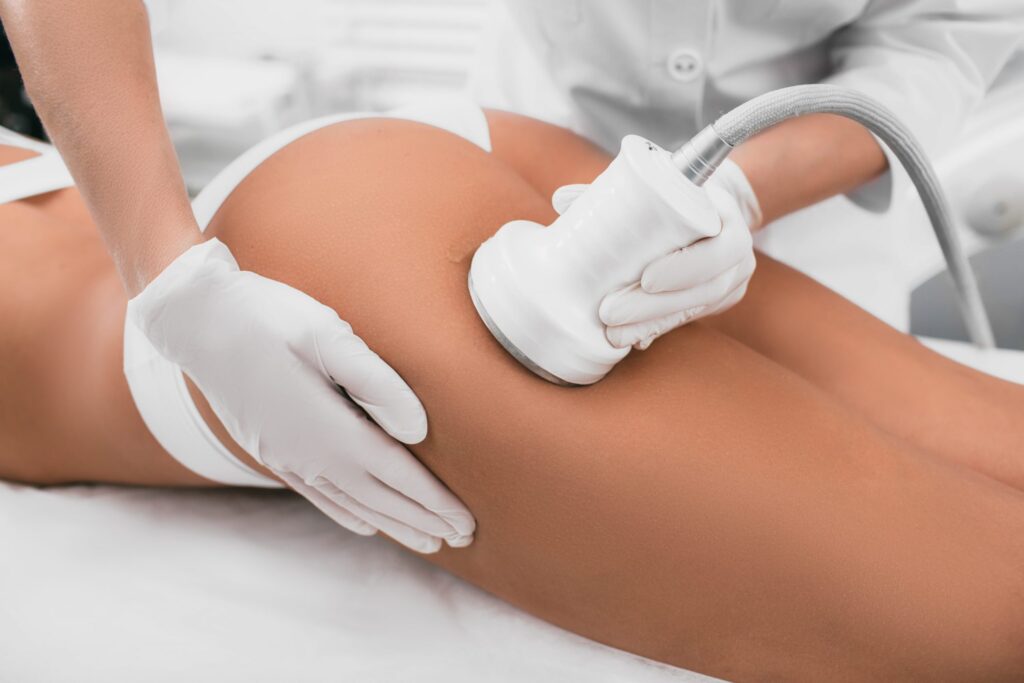
Acoustic cavitation generates microbubbles in tissue fluids using focused ultrasound. Those bubbles oscillate and collapse, rendering the membrane more permeable and mechanically disrupting adipocytes. No incisions or general anesthesia are required, so it’s non-surgical and generally performed in clinics over a series of sessions.
Cell disruption is not immediate extraction. Treated fat cells dump lipid and cellular debris which lymphatic and circulatory systems clear over days to weeks yielding gradual reduction. Common areas include the abdomen, thighs and flanks where minor, resistant areas react to multiple treatments. LIPUS—low-intensity pulsed ultrasound—adds biological modulation. It can alter mechanosensitive factors such as AP-1, Sp1, and YAP, promote integrin-mTOR signaling, and increase cell proliferation or regeneration in some contexts. Cavitation that occurs under LIPUS increases membrane permeability, but the thermal rise is only minimal, approximately 0.5°C after ten minutes, lessening heat-related tissue injury.
It has anti-inflammatory actions, such as downregulating COX-2, and can promote tissue repair by facilitating myofiber development and reducing oxidative stress. Intensity is defined by amplitude during ON periods, usually 0.02 to 1 W/cm2 at 1 to 3 MHz, and results depend on tissue type, treatment time, and device variables. Relative to liposuction, ultrasound focuses on fat with less impact on nearby tissues but produces slower, additive results.
Comparative Analysis
Liposuction and high-intensity ultrasound therapy share the goal of eliminating concentrated fat deposits and contouring the body. They diverge significantly in methodology, immediacy, hazards, and the patient journey. The table below compares invasiveness, downtime, efficacy, and longevity of results for easy reference.
Treatment
Invasiveness
Downtime
Efficacy
Longevity of Results
Liposuction
High
1-2 weeks
High
Long-term
High-Intensity Ultrasound Therapy
Low
Minimal
Moderate
Short to medium-term
Method
Invasiveness
Downtime
Effectiveness
Duration of results
Liposuction (surgical)
Invasive, incisions and suction
Several days to weeks
High; often immediate visible reduction after swelling subsides
Sustained for at least 6 months; long-term >24 weeks less studied
High-intensity ultrasound lipo (non-surgical)
Non-invasive, external energy
Minimal; 1–2 days typical
Moderate per session; incremental over multiple sessions
Sustained for at least 6 months; long-term data limited
1. Clinical Efficacy
Liposuction often delivers more fat loss in a single session. Research shows waist reductions of 2 to 4.7 cm after a single treatment, and full apoptosis is generally finished at roughly 18 weeks. Results can be dramatic once postoperative swelling subsides. Ultrasound cavitation produces smaller per session fat reductions. Standard protocols recommend 2 to 4 sessions, weeks apart, to achieve visible change. Piecing together these incremental results, total fat loss can in some cases approach surgical levels but typically less consistently. Surgical removal is more consistent as tissue is actually removed. Non-invasive procedures depend on the metabolic clearance of disrupted cells, which is unique to each patient. While both approaches boast patient satisfaction rates hovering around 80 percent, this represents different goals and target areas.
2. Procedural Safety
Liposuction complications consist of infection, ecchymosis, edema, contour abnormalities and unusual severe complications such as deep infection or fat embolism. Ultrasound therapy primarily results in minor redness, temporary soreness or local numbness. The non-invasive nature of ultrasound brings the risk of serious complications down. Technique and practitioner skill matter for both: poor technique in liposuction raises complication rates. Improper energy settings in ultrasound can cause burns. In general, surgeries have infrequent but more serious side effects, and ultrasound has primarily temporary, mild reactions.
3. Recovery Duration
Normal recovery time from liposuction is a few days to a few weeks before returning to normal activities, with compression garments and wound care as typical. High-intensity ultrasound patients experience just a few days of downtime and very little aftercare. Exercise and work return timelines therefore differ. Surgical patients may pause intense activity for weeks, whereas non-surgical patients can maintain regular schedules almost immediately. Recovery affects every aspect of life and should play into candidacy and planning.
4. Financial Investment
Liposuction carries higher initial expenses such as facility fees, anesthesia, and follow-ups. Ultrasound may be cheaper per session, but you need several sessions which increases the overall cost. A transparent cost chart allows patients to weigh one-time surgical costs against sequential non-surgical expenditures.
5. Patient Satisfaction
Studies indicate about 80% satisfaction for either strategy depending on objectives. Liposuction fares better when dramatic reduction is the objective. Ultrasound fits those prioritizing safety and low downtime. Realistic expectations are crucial because results differ by location treated and post-lifestyle.
Candidate Selection
Candidate selection hinges on quantifiable elements that influence protection, efficiency, and pleasure. Important considerations are BMI, health, skin quality, areas of interest, and expectations. Liposuction, particularly ultrasonic-assisted ones, fits individuals who require larger fat volume reduction and shape modification. Ultrasound therapy is appropriate for patients close to their goal weight looking to eliminate small, stubborn fat deposits with limited downtime. Medical background and habits are a big factor. Evaluate chronic diseases, if they smoke, how well they heal, medications, and willingness to comply with aftercare.
Surgical Profile
Best candidates are healthy adults with localized fat deposits that defy diet and exercise and who are within about 30% of their ideal weight. They tend to have good skin elasticity and muscle tone, which assist the skin in retracting once fat is removed. Folks with major medical problems, such as coronary artery disease, uncontrolled diabetes, immunocompromised status, or compromised blood flow, are bad candidates because these conditions increase the risk of surgery and delay healing. Smoking complicates matters; a nonsmoker does well.
It’s important to have preoperative stability in weight. Candidates should maintain a stable weight for months preoperatively to prevent contour changes after fat extraction. They must accept the risks: temporary numbness, seroma (fluid buildup), uneven contours, and scarring. They require a solid roadmap for postoperative care, including compression garments, reduced activity, follow-up visits, and long-term lifestyle modifications to maintain results. A consultation with a board-certified surgeon is necessary to discuss your anatomy, medical history, and realistic goals. Candidates with clear, realistic expectations and an optimistic outlook tend to be more satisfied.
Non-Invasive Profile
Near ideal body weight with minimal localized fat deposits.
Skin with reasonable elasticity; not for severe laxity.
No major health issues that affect healing.
Prefer minimal downtime and lower procedural risk.
Nonsmokers or willing to quit around treatment.
Able to maintain diet and exercise post-treatment.
Ultrasound therapy is perfect for busy people who can’t afford to take weeks off to recover. Sessions are typically brief and can accommodate a workweek. It’s not an obesity or major weight loss answer. It’s for pocket targeting, not bulk fat extraction. Patients should be aware that results are conservative and several treatments may be required.
For some reason, a balanced diet and regular exercise is a must after either. Both require realistic expectations. Weight gain after treatment will negate results. A surgical consult is still required for ultrasonic liposuction. Non-invasive routes frequently commence with a clinical visit to verify eligibility.
Clinical Evidence
As for clinical evidence, the literature contrasts liposuction (surgical removal of subcutaneous fat) and noninvasive ultrasound fat reduction on endpoints like fat volume change, safety events, and patient satisfaction. Below are summaries of published results, important study distinctions, and guide points for charting comparative data.
Research Data
Research documents fat volume reduction as a primary endpoint, either in milliliters or by change in circumference. Clinical evidence includes imaging tools such as ultrasound imaging, MRI, and caliper-based measures to quantify adipose loss. Among the important metrics are average percent volume reduction, complication rates per 100 procedures, and validated patient satisfaction scores. For example, reports of ultrasonic-assisted liposuction show high satisfaction: a 2010 series reported 80% satisfaction among 609 patients treated between 2002 and 2008. Complication figures in UAL series range from seromas to hypotension, contact dermatitis, and hemorrhage. A review of 660 UAL procedures recorded these incidents with differing frequency.
Clinical Evidence Surgical liposuction provides more immediate and often larger volume reductions that remain if the patient’s weight is stable. In one study, approximately 35% of liposuction patients gained weight following the procedure, mostly within the first year, which can counteract benefits. Ultrasound therapy demonstrates more modest reductions that might necessitate multiple sessions, with longer-term maintenance data being more sparse. Both techniques share temporary edema and mild side effects that typically dissipate a few weeks post, but complete contour maturation can take weeks to months.
Imaging and biochemical assays in select trials indicate adipocyte disruption post ultrasonic energy, with remodeling following. Studies track secondary care needs: post-liposuction patients commonly use compression garments to optimize contour and healing. Both have demonstrated increased risk of scarring with ultrasonic liposuction versus traditional techniques, and surgical settings see higher seroma rates unique to energy-assisted devices. Active studies are attempting to optimize energy levels, treatment timing, and patient selection in order to reduce side effects.
Seeing results side by side in a table—study design, n, follow-up months, mean volume change, complication types and rates, satisfaction—makes the differences between trials clear and helps clinicians make informed decisions.
Evidence Gaps
Many trials have short follow-up, small sample sizes, or lack blinded assessment, limiting confidence in long-term comparisons. Direct head-to-head randomized trials between liposuction and ultrasound therapy are sparse. Most evidence compares each to baseline or to alternative nonrandomized controls. Reporting standards vary. Some studies use circumference, while others use imaging volume, complicating pooled estimates. Long-term safety questions remain, including the true rate and drivers of post-procedure weight gain, durability beyond two years, and risk differences tied to device settings. Standardized endpoints and larger randomized trials would help fill these gaps.
Practice Insights
Veteran plastic surgeons stress patient selection to achieve great results with both ultrasonic liposuction and non-invasive ultrasound treatment. They examine skin quality, achievable goals and health. Ultrasonic liposuction starts with an in-depth consultation discussing goals, medical history and areas to target. Surgeons use that visit to define expectations about contour boundaries and recovery time. As with non-surgical ultrasound therapy, clinicians screen for BMI, loose skin and metabolic issues that may blunt results. Ideal candidates have localized fat deposits and good skin tone.
Surgeons report common practice challenges for both surgical and non-surgical methods. Swelling, bruising, and temporary numbness are par for the course in ultrasonic liposuction. The initial month post-op is typically the most important for healing. Patients will often wear compression garments to mold tissues in place and reduce any fluid accumulation. Liposuction has about a two to three week downtime with activity restrictions and compression, but most patients go back to light work in 5 to 7 days. Complete healing can take a few weeks, and many patients experience initial differences at only four weeks. Non-invasive ultrasound therapy raises different issues: modest fat loss per session, need for multiple sessions, variable results by device, and slower visible change. Both strategies demand explicit preoperative counseling to prevent frustration.
Technology and technique have made it safer and better. Ultrasonic liposuction has now adapted focused energy to liquefy fat while minimizing damage to surrounding structures like blood vessels and nerves, which reduces bruising and accelerates healing. Devices with real-time temperature control and refined cannula designs minimize the risk of contour irregularities. On the non-surgical side, newer ultrasound protocols and combination treatments using radiofrequency and ultrasound have demonstrated more effective tightening and fat reduction than older, single-mode devices.
How to Get the Most Satisfaction and the Least Hassles About Planning and Aftercare For liposuction, choose a board‑certified surgeon, verify anesthesia and facility accreditation, and set a realistic budget. Comprehensive treatment plans typically cost between $2,000 and $4,000 depending on treated areas, anesthesia, and facility fees. Follow post‑op instructions closely: wear compression as advised, avoid heavy lifting during the two to three week recovery window, and report any signs of infection or uneven healing promptly. With good care, you should anticipate a normal liposuction circumference reduction of approximately 2 to 5 cm. For non-invasive therapy, go with devices that have published data, schedule repeat sessions, and use adjuncts like exercise and diet to maintain results.
Alternative Modalities
Other modalities to liposuction and ultrasound therapy represent a broad swath of non- and minimally invasive options. These are CoolSculpting (cryolipolysis), laser lipo (low-level or high-energy lasers), RF body contouring, shockwave therapy, ultrasound-based noninvasive treatments, weight loss injections like GLP-1 receptor agonists, acupuncture, and laser acupuncture. Brief context: some of these aim to remove or shrink fat cells directly, others change tissue behavior or circulation, and a few come from traditional medicine with holistic goals.
CoolSculpting crystallizes fat cells so they perish and are eliminated naturally. Benefit: noninvasive, little to no downtime. Drawback: results are gradual, multiple sessions often needed, and rare paradoxical fat growth can occur. Laser lipo is noninvasive (low-level laser) or minimally invasive (fiber-assisted). Benefit: can target small areas and tighten skin in some cases. Drawback: variable results, risk of burns or unevenness with higher energy devices. Radiofrequency devices heat tissue to encourage fat loss and skin tightening. Benefit: good for mild laxity and contouring. Drawback: multiple sessions, results modest compared with surgery.
Weight loss injections alter systemic appetite and metabolism. Benefit: significant weight loss for many patients and medical management of metabolic issues. Drawback: not a targeted body-contouring tool, side effects and ongoing treatment may be required, and cost can be high. Alternative modalities include shockwave therapy, which uses mechanical pulses and has been used for chronic pain, soft tissue injuries, and scar tissue. Benefit: may improve local healing and reduce pain. Drawback: can be uncomfortable, may cause spasms, and evidence for fat loss is limited.
Acupuncture and laser acupuncture have extensive traditional backgrounds. Acupuncture involves penetration by needles and can have a risk of infection, bruising, or bleeding if not performed in a sterile manner. The benefits include holistic effects and possible symptom relief across body systems. Some studies suggest long-term relief for certain conditions. Laser acupuncture employs cold lasers to stimulate acupuncture points without needles, thus eliminating any concerns regarding skin penetration. Both are frequently utilized adjunctively to other treatments, as opposed to individually.
Ultrasound and shockwave differ in mechanism. Ultrasound uses high-frequency sound vibrations, while shockwave delivers pulses that propagate as shockwaves. Treatment time is quite variable, usually ranging from 5 to 60 minutes. Others experience sessions as uncomfortable or painful. Safety and efficacy vary by device type, operator skill, and individual factors.
Treatment
Invasiveness
Effectiveness for Fat Loss
Recovery/Notes
CoolSculpting
Noninvasive
Moderate, gradual
Minimal downtime; multiple sessions
Laser lipo
Non/minimally invasive
Variable; localized
Risk of burns; modest recovery
Radiofrequency
Noninvasive
Mild to moderate
Best for skin tightening
Shockwave therapy
Noninvasive
Limited for fat loss
Used for pain; can be uncomfortable
Ultrasound therapy
Noninvasive
Variable
Sessions 5–60 min; operator dependent
Weight loss injections
Minimally invasive
Systemic, high for weight
Not targeted; ongoing use
Acupuncture
Minimally invasive
Not primarily for fat loss
Infection/bruising risk; holistic
Laser acupuncture
Noninvasive
Not primarily for fat loss
No needle risks; adjunct therapy
Consider a treatment that aligns with body goals, medical history, pain tolerance and lifestyle limitations.
Conclusion
Lipo slices fat speedy and has immediate, visually striking shape transformation. Lipo vs. Ultrasound Therapy
Ultrasound therapy softens fat and tightens skin with no incision and much less recovery time. Pick lipo for thick, persistent fat that you want immediately removed. Save ultrasound for mild pockets, skin laxity or the low-risk route. Clinical research supports both approaches for the appropriate cases. Actual results are going to be based on the tool, the operator, and the follow-up care. For instance, someone with 5 to 8 centimeters of localized belly fat and loose skin usually experiences faster, more significant change with lipo. That said, a patient with 1 to 3 centimeters of resistant fat and good skin tone can often benefit from ultrasound treatments. Consult with a certified clinician, see before and after photos, and chart a clear course. Book a consult so we can compare apples to apples and set realistic goals.
Frequently Asked Questions
What is the main difference between liposuction and ultrasound therapy?
Liposuction is an invasive surgical procedure that vacuums fat with a cannula. Ultrasound therapy is noninvasive and utilizes focused or cavitational sound energy for fat reduction and tissue tightening without incisions.
Which option gives faster and more noticeable results?
Liposuction delivers instant, dramatic fat reduction. Ultrasound therapy yields slow results over weeks to months and is optimal for minor reductions and contouring.
Who is a good candidate for each treatment?
Liposuction is for individuals close to their ideal weight with localized fat deposits and good skin elasticity. Ultrasound therapy is right for those with mild to moderate fat, a realistic approach, and who want non-surgical care.
What are the typical recovery times and risks?
Lipo has days to weeks of recovery, swelling, and surgical risks. Ultrasound therapy generally comes with little downtime and less risk, but will require several sessions.
How do clinical outcomes compare in safety and effectiveness?
Clinical studies prove lipo is more effective for high volume reduction. Better yet, ultrasound therapy is safe for low-risk, non-surgical body contouring with mild effectiveness in appropriately selected patients.
Can ultrasound therapy replace liposuction for body contouring?
No. Ultrasound therapy can augment or minimize surgical intervention in select cases, but it doesn’t substitute for lipo when it comes to serious fat extraction or significant contouring.
Are there alternative treatments to consider?
Yes. Options are cryolipolysis (fat freezing), radiofrequency tightening, and injectable lipolysis. Each varies in effectiveness, downtime, and what goals they’re best suited for.