Here you can find the latest news and surgical articles.
28 November 2026
When to call your doctor: fever after liposuction, causes, and recovery guidance
Key Takeaways
Know your normal temperature range pre-surgery and check your temperature at the same time every day to detect shifts early. Record temperatures and symptoms in an easy log for your doctor.
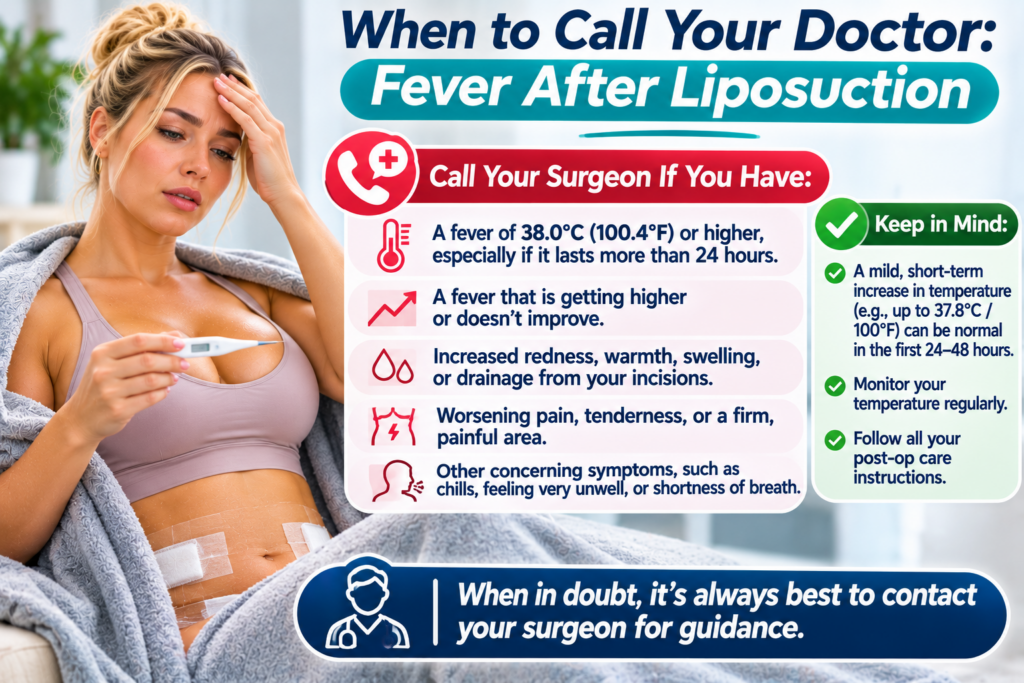
Anticipate low-grade fevers under 38C as a normal post-op response. Call your doctor if it climbs above 38C or is on an upward trend.
Get immediate care for spikes over 38.3°C, fever lasting more than 48 hours, or intense chills, and relay specific temperatures and timing from your recording.
Monitor your incision sites for spreading redness, warmth, pus, foul odors, or changing drainage. Call your provider immediately if any of these signs develop.
Consider chest pain, sudden shortness of breath, rapid heartbeat, or feeling very unwell a medical emergency and seek immediate attention.
Plan ahead of surgery with a digital thermometer, a recovery-area monitoring configuration, and defined follow-up strategies to enable early diagnosis and a swifter response.
Liposuction fever after surgery when to call in the context of a temperature increase that could indicate infection versus normal healing. Mild fever below 38C is common during the first 48 hours and might not require urgent attention. High fever above 38.5°C, worsening pain, redness, or drainage warrants medical contact. Remember to mention timing, measured values, and other symptoms when asking for advice. Below is a general guide of when to be concerned, what to look for, and what to do next.
Temperature Baselines
Temperature baselines Knowing what someone’s temperature is before surgery makes post-operative readings significant. Normal body temperature is usually given as 98.6°F (37°C), but individuals have their own baselines. Some run a bit low or a bit high by about 0.5 to 1.0°F. Take your resting temperature for a few days prior to the surgery, if possible, at the same time of day and with the same thermometer. Use metric where helpful. Thirty-seven degrees Celsius is a common reference point. Thirty-eight degrees Celsius equals 100.4°F and is the usual clinical threshold for concern.
Normal Reactions
Temp baselines 2. A slight increase in temperature post liposuction is to be expected as part of the inflammatory response to tissue trauma. Your body increases blood flow and immune activity to start the healing process and this can lead to low-grade fevers below 100.4°F (38°C) in the initial 24 to 48 hours. Mild swelling and redness localized around incision sites is normal. Some fatigue or discomfort is to be expected too. Most patients show gradual improvement over a few days. Pain eases, swelling recedes, and temperature returns toward baseline. If symptomatic abatement is consistent, at-home supportive care, including rest, fluids, and cautious ambulation as directed, typically is adequate.
Infection Risks
A fever greater than 100.4° (38°C) requires more vigilant observation because that’s what a lot of surgical teams use as the threshold for additional investigation. A fever on day three or later is more likely to represent infection than a fever presenting immediately after surgery. Search for expanding erythema or swelling or an increase in warmth or pus from incisions; these are indications of bacterial infection and require immediate evaluation. Worsening pain or swelling, not following anticipated healing trajectories, is another warning sign. Other systemic symptoms such as a fast heart rate, chills, continuous nausea, or just feeling generally ‘off’—if occurring in combination with temperature spikes—get in touch with your provider. Temperatures over 104°F (40°C) are high and might need emergency treatment. Remember that 99.5°F alone is not a fever by conventional standards, so track trends and don’t respond to isolated mild readings.
Track temperature at the same time daily for consistency and note any departures from your pre-op baseline. A basic log of when, what reading, and associated symptoms allows clinicians to determine if observation, antibiotics, or immediate intervention is appropriate. Obvious charts minimize eighty percent of the guesswork and accelerate proper treatment.
When to Call
Post-operative fever after liposuction can represent anything from a normal post-operative inflammatory response to early infection or other complications. CALLING — WHEN TO CALL your surgical team as well as a short checklist for deciding when to call your surgical team. Maintain a record of temperatures, symptoms, and timing to provide to clinicians. This makes remote triage quicker and more precise.
1. High Spikes
Consider anything over 101°F (38.3°C) a red flag. Take two readings an hour apart and record the times precisely. Sudden sharp rises are important to note, as they indicate a systemic response and not routine postoperative warmth. Match current readings to your post-surgery baseline. If you normally run low-grade warmth and then spike, call immediately. If high fever is accompanied by severe pain, heavy bleeding, confusion, or spreading redness, consult and get emergency care.
2. Persistent Heat
If fever persists beyond 48 hours post surgery, call for advice. Track daily trends: small evening blips that fall with rest differ from steady elevation over days. Not improving after rest, fluids and approved fever reducers warrants clinician input. Persistent low-grade fever in the first few days is common, but persistence beyond 2 days or an increase after initial improvement can indicate infection. Keep in mind infections tend to pop up in the first two weeks, and the wound should receive a daily check for roughly a month even after it appears closed.
3. Severe Chills
Uncontrollable shivering or intense chills aren’t normal and should trigger a call. When chills accompany fever, they indicate systemic infection or bacteremia. Keep a record of each incident—how long it lasted, how intense it was, and any associated symptoms like lightheadedness or vomiting—and share this with your provider. If chills persist for over an hour or are succeeded by fainting, call immediately.
4. Foul Odors
Obvious foul smell from incision sites or drainage is a clinically useful indicator of wound infection. Smell changes generally accompany changes in color or consistency of drainage. Thick, green, or foul fluid is worrisome. Check dressings every day and put odor or change on your checklist. If odor intensifies rapidly, call the surgical team for same-day evaluation.
5. Chest Pain
Chest pain following liposuction is a medical emergency. Differentiate mild postural soreness from sharp, persistent pain and pay attention to shortness of breath, a fast heart rate, or sweating. If chest pain occurs with fever, call 911 immediately. In kids or anyone additionally vomiting and with no oral intake, phone contact the same day is necessary as dehydration and complications can become serious fast.
Root Causes
Postoperative fever following liposuction can arise from a few different mechanisms. Below, we deconstruct common causes so readers can distinguish routine healing from symptoms requiring emergent care. A nice, simple table at the end summarizes things for quick reference.
Tissue Trauma
Surgical manipulation of fat and connective tissues tends to provoke a low-grade fever. The body feels damaged and dispatches immune cells and inflammatory chemicals to initiate repair, and that response raises body temperature a bit. This fever is typically low-grade, below 38.3°C, accompanied by anticipated swelling and tenderness that resolves in days. Trauma-related fever peaks early within 24 to 72 hours and then declines as inflammation abates. If fever persists, exceeds 38.5°C, or is accompanied by worsening pain, redness spreading from an incision, or uncontrollable bleeding that won’t stop with pressure, suspect infection over simple trauma.
Fluid Shifts
Liposuction changes regional and systemic fluid equilibrium. Tumescent fluid, blood loss, and lymphatic disruption result in compartment shifts. These changes can cause temporary fever spikes as the body re-prioritizes. If drains are in place, observe output, track urine, and observe swelling trends. Asymmetric swelling, with one side larger than the other, is normal but can indicate a localized issue like seroma. Seromas occur in about 0.65% of cases and can lead to lumps or delayed contour change. They may cause low-grade fevers until drained. The majority of fluid fevers resolve with hydration, rest, and time. Persistent fever accompanied by escalating swelling, warmth, or calf pain should trigger an evaluation for DVT or infection.
Deep Infections
Deep tissue or organ-level infections are less common but serious. These can present with persistent high fever, chills, severe or worsening focal pain, skin discoloration, or a spreading area of redness. Pain that radiates around an incision or a new area of intense tenderness raises concern. Potential sources include an abscess in the liposuction plane, infected seroma, or systemic spread leading to sepsis. Signs of sepsis include rapid heart rate, low blood pressure, confusion, and high fever. These require urgent care. Other red flags include uncontrolled bright-red bleeding, marked asymmetric swelling with warmth, or one calf that is markedly painful and swollen, which could indicate DVT, a surgical complication needing immediate assessment.
Simple reference table for quick review:
Trauma: mild fever, early, resolves in days.
Fluid shifts/seroma: transient fever, swelling, possible lump (≈0.65%).
Deep infection/sepsis: persistent high fever, severe pain, systemic signs.
Patient Preparation
Liposuction patient preparation decreases anxiety and helps you detect potential issues early. Collect materials, designate a post-needle recovery zone, educate yourself on what symptoms are important, and strategize how you will document changes. Here are concrete actions and samples to monitor after the operation that are simple and understandable.
Thermometer Choice
Choose a dependable digital thermometer for speedy, precise readings and convenience. Opt for one with memory recall so you can contrast morning and evening numbers without having to jot down a reading each time. This assists in identifying trends that count. No mercury thermometers; they are breakage and safety hazards. Sanitize the thermometer prior to initial use and follow the manufacturer’s guidelines to calibrate if suggested. A quick test against a known room temperature can verify it registers appropriately. Have extra batteries on hand and keep the unit where you will use it, such as by the bedside or on the recovery tray.
Symptom Logs
Develop a daily diary of temperature, pain score, swelling, color changes, drainage, activity-related fluctuations and new symptoms. Patient Preparation—just use a simple table: date, time, temperature, pain (0–10), swelling notes, wound appearance, comment on mobility or feverishness. Example entry: “Day 3, 08:00, 37.2°C, pain 4/10, mild edema both hips, dry incision left, started short walk.” Go over the log every night to identify any deteriorating trends or patterns such as increasing temperatures or unilateral swelling. Frequent review makes it simpler to deliver brief, helpful reports at early post-op visits at 24–72 hours and 1–2 weeks, which help clinicians catch problems while still manageable.
Organize symptom tracking so it’s fast: pre-print sheets, use a simple app, or place a clipboard within reach. If swelling or lumps persist beyond the expected course, or there is a rapidly growing lump or odd bulge, mark those cases so you can order ultrasound imaging quickly. Keep in mind that a short mild fever on day one or two is normal and usually associated with anesthesia. Record it anyway.
Get ahead of wound care with cleaning supplies and dressings within reach of the recovery area. Incision sites need daily care: keep them clean, follow wound care directions, and watch for increasing redness, drainage, or heat. A temperature of 38.5C/101.5F or higher or any fever that begins a few days post-op and continues, or new unilateral pain and redness should be reported.
Clinical Insights
Most post-liposuction fevers are mild and self-limiting. Following tissue injury and fluid shifts, the body sometimes mounts a transient inflammatory response that raises temperature. A low-grade fever in the first one to two days is common and usually reflects inflammation and anesthesia, not infection. This tends to resolve within a couple of days without antibiotics, and uncomplicated efforts such as liquids, rest, and Tylenol if warranted will generally suffice.
Timing aids in organizing potential causes. Fever in post-op days 1 to 2 is generally inflammatory. Fevers starting or continuing on days 3 to 5 are more prone to indicate infection, such as pneumonia or a UTI, and warrant further investigation. A fever that begins after day 3, rises above 101 degrees F (38.3 C), or occurs in conjunction with wound redness, pus, increased pain, difficulty breathing, confusion, or a racing pulse should lead you to immediately reach out to the surgical team or emergency care. Most clinicians utilize 100.4°F (38°C) as a working definition of fever in adults. Context and trend are as important as any isolated measurement.
The sooner you take action, the less likely it is you’ll encounter a serious complication. When infection is suspected, immediate workup can include a wound exam, wound swab for culture, bloodwork including white count, and imaging such as ultrasound or CT to evaluate for fluid collections or abscesses. For instance, a patient with a tender incision and fever on day five may need a wound swab and ultrasound to exclude a pocket of pus that needs draining. Early drainage and focused antibiotics prevent spread and hasten recovery.
Patient education is crucial to safe recovery. Written discharge instructions should mention what temperature to report, what wound changes warrant review, and how to identify systemic signs such as rapid heart rate or confusion. Provide examples: measure oral or axillary temperature twice daily, note increasing redness around the incision, report any foul drainage, and seek care for breathing problems. Teach simple self-care: keep dressings clean, avoid soaking incisions, and stay hydrated. Be sure patients can get to their clinic outside of business hours.
Personalized medicine saves lives. Take into account his age, medical history, smoking status and how aggressive the liposuction was when you decide follow-up timing and thresholds for intervention. A smoker or diabetic patient may require earlier review for low-grade fever than a young healthy person. Antibiotics should be tailored to culture results and clinical severity to prevent unnecessary treatment.
Care Protocols
Care following liposuction is intended to minimize complications, manage inflammation, and assist tissue recovery. Adhere to wound care and medication regimens established by your surgical team. Wash incisions as recommended, typically with gentle soap and water or a medicated solution, and dry by dabbing. When instructed, change dressings; don’t remove compression garments early unless directed. Take antibiotics and pain medicines as instructed. Skipping a dose or quitting an antibiotic prematurely can let an infection gain a foothold. Monitor temperature twice daily for the first week and any new symptoms immediately.
Stay well hydrated and eat balanced meals to aid healing. Target two to three liters of fluid per day unless directed otherwise by your provider, and incorporate protein with every meal to assist tissue healing. Good sources include lean meats, beans, dairy, or plant-based proteins. Include some fruits and vegetables for vitamins and fiber to help ward off constipation from the pain meds. If you can’t eat solids, use high-protein shakes or soups. Malnutrition and dehydration impede wound healing and increase the risk of infection.
Restrict activity until cleared by provider. No heavy lifting, no intense cardio, no bending for at least 2 weeks or as directed. Care Protocols: Short walks a few times a day minimize clot risk and promote circulation, but cease if you become dizzy, short of breath, or your pulse races. Care Protocols: Gradually increase activity based on pain and swelling. Over-exertion too early can lead to increased bleeding into surgical spaces and potentially incite inflammatory or infectious collection formation with fever.
Follow all wound check and temperature review appointments. Early clinic visits permit swabs, simple blood tests, or imaging if symptoms develop. Fever beginning on day three or later, or fever with progressive abdominal pain should be reported immediately. Most teams take 100.4°F (38°C) as the fever cutoff. A temperature over 101°F (38.3°C) or a fever that persists after day three is more worrying. Low-grade fever in the initial 48 hours is commonly a manifestation of normal inflammation and residual gas utilized during surgery. This response peaks and subsides within 48 to 72 hours.
If fever occurs on day five with a tender incision, clinicians frequently request a wound swab, CBC and sometimes an ultrasound or CT scan to look for fluid or pus. They should immediately seek urgent care for fever and wound redness with pus, difficulty breathing, confusion, or a racing heartbeat. A fever in a baby under 3 months must be reported immediately.
Conclusion
Fever after liposuction can indicate various concerns. Any persistent ascent above 38°C, chills, rapid pulse, foul wound odor, discharge, or increasing pain suggests infection or another complication. Take daily temperature logs, heed your clinic’s care steps, and seek help promptly when red flags arise. Examples: a steady 38.5°C with swollen, hot skin needs a call; a single 37.8°C that drops with rest and medication can wait for the next check-in. Believe obvious symptoms over anxiety! If you are ever unsure or observe any worrisome symptom, call your surgeon or clinic. Schedule that call sooner versus later.
Frequently Asked Questions
When is a fever after liposuction normal?
A temperature of up to 38°C (100.4°F) in the first 48 to 72 hours can be normal from inflammation. Liposuction fever after surgery when to call. If it increases or lingers, call your surgeon.
What temperature after liposuction is an emergency?
Get urgent care for temperatures greater than or equal to 38.5°C (101.3°F) or a fever accompanied by intense pain, extending redness, pus, dizziness, or shortness of breath. These can indicate infection or other complications.
How long after liposuction can fever appear?
Fever from normal inflammation is usually within 48 to 72 hours. Fever occurring after 3 to 5 days is more likely to be infection-related and needs to be evaluated by your surgeon.
What causes fever after liposuction?
Etiologies range from physiologic inflammatory response, hematoma, seroma, surgical site infection, or less commonly deep infection or pulmonary. Your surgeon will evaluate symptoms and wound appearance.
What should I do at home if I have a low-grade fever?
Rest, hydrate, use prescribed pain meds, and apply cold packs if recommended. Take temperature frequently. Call your surgeon if it continues beyond 72 hours or gets worse.
Can antibiotics prevent post-liposuction fever?
Antibiotics for infection treatment or occasionally prevention per surgeon protocol. They do not stop inflammation-related fevers. Take your surgeon’s prescription and complete the course if provided.
How will my doctor diagnose the cause of fever?
Your surgeon will review symptoms, examine the wound, and may order blood tests, wound cultures, or imaging. Early evaluation helps distinguish normal healing from infection.